From visual identity to visual experience
Visual experience is now about more than how a brand looks. How tactile, sensory and immersive design are changing the way brands feel.
Selli Porteva ·

For a long time design was seen as something you simply look at: colours, shapes, composition. Today that is no longer enough. In a world of endless scrolling and visual noise, brands are starting to understand that attention isn’t won by being “prettier” but by offering a more meaningful visual experience. Visual experience is the fine layer between what we see and what we feel. It doesn’t shout, explain or impose itself. It simply stays with you.
Why visual experience is becoming the new standard
The reason this approach is gaining so much ground is fatigue. Audiences are tired of identical templates, perfectly polished visuals and content that looks good but leaves no trace. In response, design is moving in a different direction, towards an experience that feels more intuitive and more human.
A visual experience isn’t meant to impress for a second, but to create a sense of ease, clarity and presence. It works on a subconscious level, and that is exactly why it is more effective.
Tactile design: when digital looks tangible
One of the key directions in hybrid visual languages is the so-called tactile approach. This is design that creates an illusion of touch through texture, slight imperfections, grain, or play with light and shadow. It isn’t about realism but about a sense of materiality.
When a visual experience has “weight” and character, the brand starts to feel more real and closer to people. That matters especially in digital spaces, where everything risks looking flat and impersonal.
The sensory approach and the role of motion
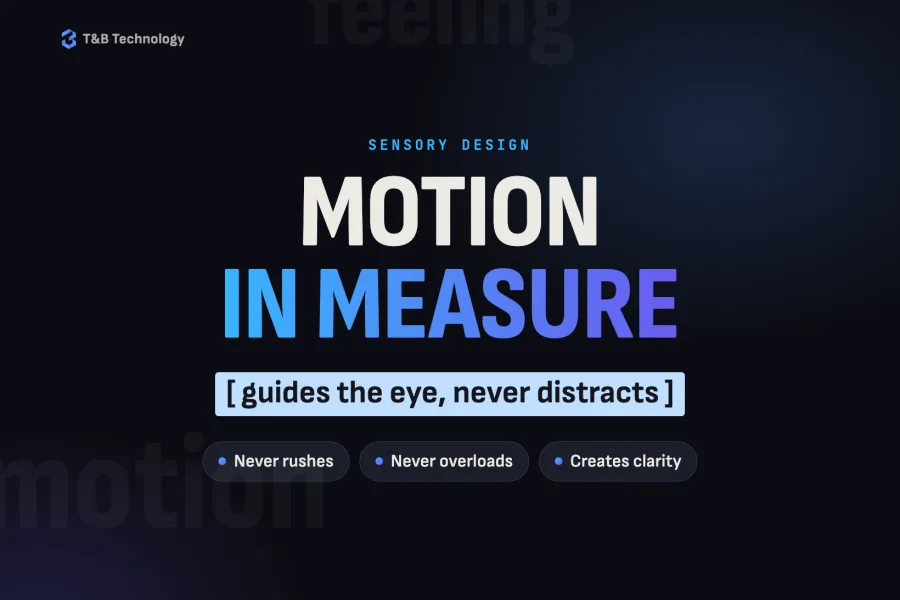
Visual experience isn’t limited to what we see standing still. The way elements appear, move and react matters just as much. Smooth transitions, the rhythm of animations and even the pauses between them directly affect how we take in content.
Sensory design respects the user’s attention. It doesn’t rush, overload or distract. Instead, it guides the eye and creates a sense of control and clarity, which is at the heart of a good visual experience.
Immersive design: an environment, not just a look
When we talk about immersive design, we often picture VR or complex 3D environments. In reality, an immersive visual experience can be completely simple. It lies in how a website, a campaign or a visual system responds to the user’s context and behaviour.
The immersive approach turns design into an environment that users move through naturally, without thinking about it. It is design that doesn’t stand still but lives and adapts.
A multi-platform visual experience and brand identity
Today the visual experience has to be consistent everywhere: on the website, on social media, in videos and in presentations. That doesn’t mean the same colours and shapes everywhere, but the same feeling. One brand can look different in different contexts and still “feel” the same.
This is where a hybrid visual language becomes a strategic advantage, not just a design decision.
Design that is felt, not just seen
In future, brands won’t compete on who looks better but on who feels more genuine. Visual experience is the bridge between design and emotion, between form and trust. When design is made to be felt and not just seen, it starts working for the long term and leaves a real mark on the audience’s mind.
If your question goes beyond one article and is about the whole brand rather than a single detail, here is how we approach branding, from identity to brand book.
Graphic design
A face people remember: graphic design from one team.
CASE STUDYArte: social media, TikTok, brochures and campaigns for a food producer
Facebook and Instagram with their ads, videos, a TikTok profile built from scratch, monthly brochures and gift campaigns for Arte — a Bulgarian staple-food brand (rice, beans, lentils, sugar, pasta and preserves) distributed nationwide.