Has your brand stopped growing? Where to look for the problem
How to tell when your brand’s development is falling behind, and how to get it moving again with stronger strategy, design and communication.
Selli Porteva ·
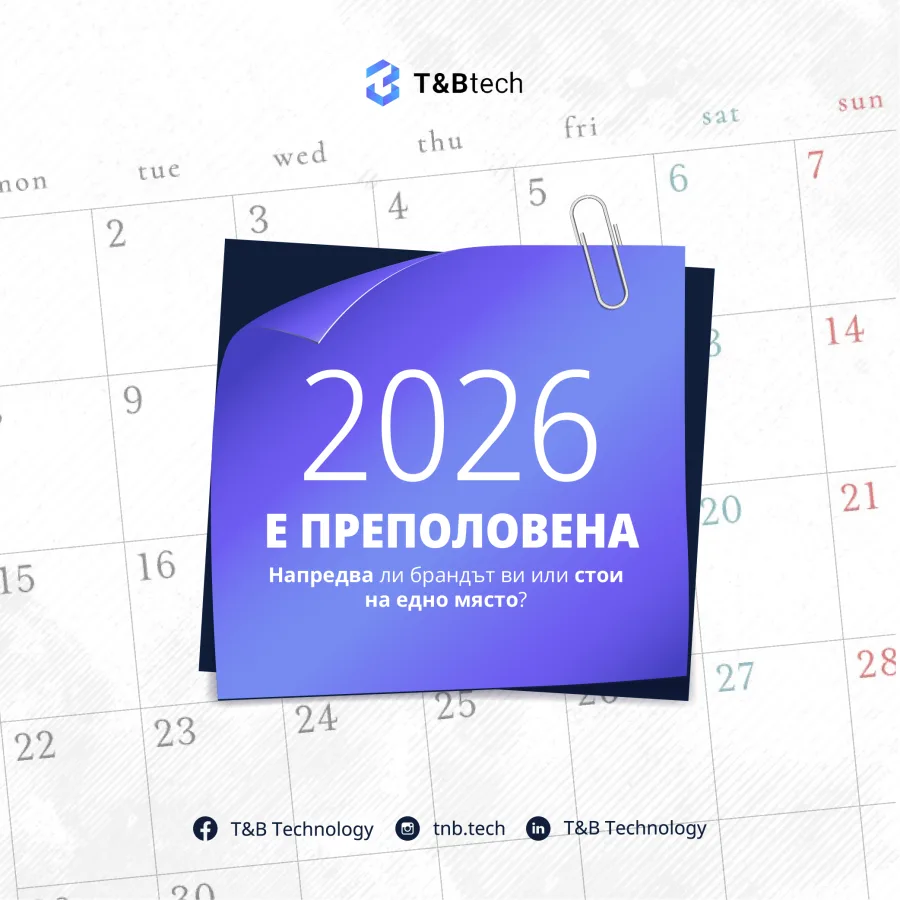
Why brand development shouldn’t stop after the start of the year
Many companies follow a familiar pattern: a burst of marketing activity at the start of the year, then a gradual slowdown. The risk is that brand development loses its consistency, and your communication loses its clarity.
Brand development isn’t a one-off campaign. It’s an ongoing process that covers strategy, design, content and adapting to the market. When that process is interrupted or loses momentum, the brand starts to lose visibility and recognition in a competitive market.
Signs your brand development has stalled
One of the clearest signs that brand development has slowed is communication that hasn’t changed for a long time. When the visual identity, the messages and the content all stay the same, your audience starts to see the brand as static.
Another important sign is falling engagement on your digital channels. It often means your content no longer meets your audience’s expectations or has fallen behind current trends in communication.
And if your competitors start to look more active and more recognisable, that’s a sign your own brand is falling behind.
Outdated visual identity and communication
Visual identity is one of the most important parts of brand development. If it isn’t updated over time, the brand starts to look dated, even when the product or service is as good as ever.
Design, typography and visual language need to evolve along with what customers expect. Otherwise a gap opens up between how the brand wants to be seen and how it actually looks.
Inconsistent content
Consistency is critical to lasting brand development. When content goes out at random, or without a clear strategy, it’s hard for your audience to build a relationship with the brand.
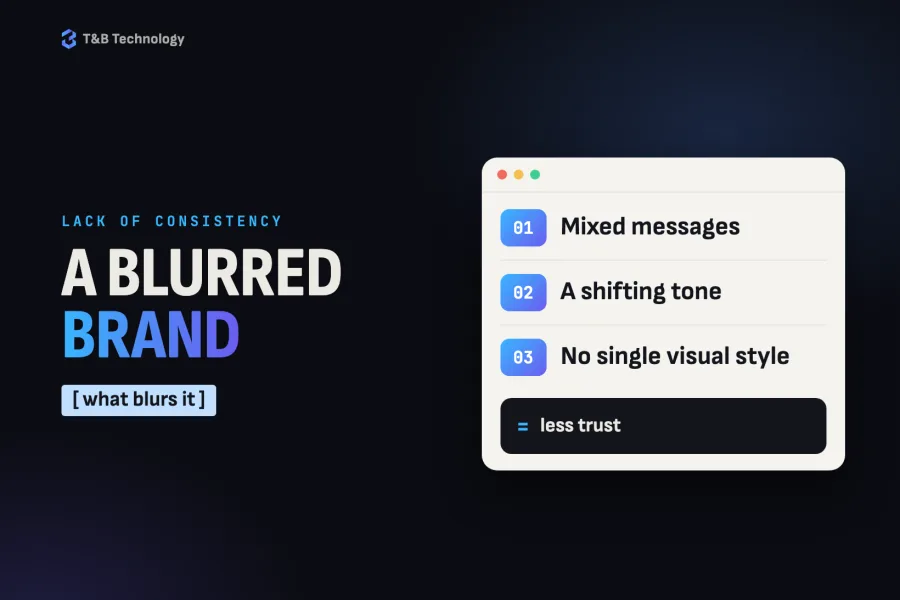
Mixed messages, a shifting tone of voice and no single visual style blur the brand’s identity. That erodes trust and weakens its position in the market.
Falling behind new digital trends
The digital world changes fast. Formats, platforms and user behaviour are constantly evolving. Brands that don’t adapt their communication gradually lose relevance.
Brand development means keeping an eye on trends and knowing how to apply them strategically. That doesn’t mean chasing every new fad. It means adapting intelligently as the world around you changes.
How to speed up your brand development in the coming months
Getting brand development back on track, and speeding it up, takes a strategic approach. That means taking a clear look at where the brand stands now, pinpointing its weak points and building a consistent framework for its communication.
The main steps are:
- updating the visual identity where needed
- building a clear content strategy
- keeping your communication regular and steady
- adapting to new formats and channels
When these work together, brand development becomes sustainable and predictable.
Is it time for a new direction for your brand?
The second half of the year is often when it becomes clear which brands are actively developing and which are falling behind. If brand development hasn’t been a priority so far, now is a good time to reassess your strategy and adjust it.
Brands that keep their communication and visual identity evolving build a stronger presence and longer-lasting trust in the market.
Branding
Branding: a logo, business cards, letterheads and a brand book that sets the rules — an identity that stays yours.
CASE STUDYThe Book: a visual identity, Canva templates and printed materials for a dark-romance bookstore
A visual identity for The Book, an online bookstore for dark-romance fiction: logo, palette and type, then Canva templates and printed materials for readers.