Brand POV as a growth strategy: why a clear point of view pays off
Performance marketing captures demand that already exists. A clear brand point of view builds value that lasts. Why you need both, and how they work together.
Selli Porteva ·

What a brand POV strategy is and why it matters
Competition for attention online is fierce, and people are increasingly demanding about the content they consume. This is where a brand POV strategy becomes a key driver of sustainable growth. A brand POV (point of view) is more than positioning or a tone of voice. It is the brand’s clearly stated view on the subjects that matter to its audience.
This strategy builds an identity that goes beyond your products or services. It lets people recognise the brand not only by how it looks but by the ideas it stands for. When a company communicates its perspective consistently, people start to see it as an authority and a trusted source, not just a supplier.
The long-term limits of performance marketing
For years, performance marketing was the main engine of digital growth. Campaigns optimised for clicks, conversions and ROI delivered fast, measurable results. Relying on this approach, though, has its limits.
Performance marketing works best when demand already exists. It does not create new demand; it captures what is already there. So without a strong brand POV strategy, a brand stays dependent on paid channels and short-term results. And as advertising costs rise and algorithms change, the model is gradually becoming less effective.
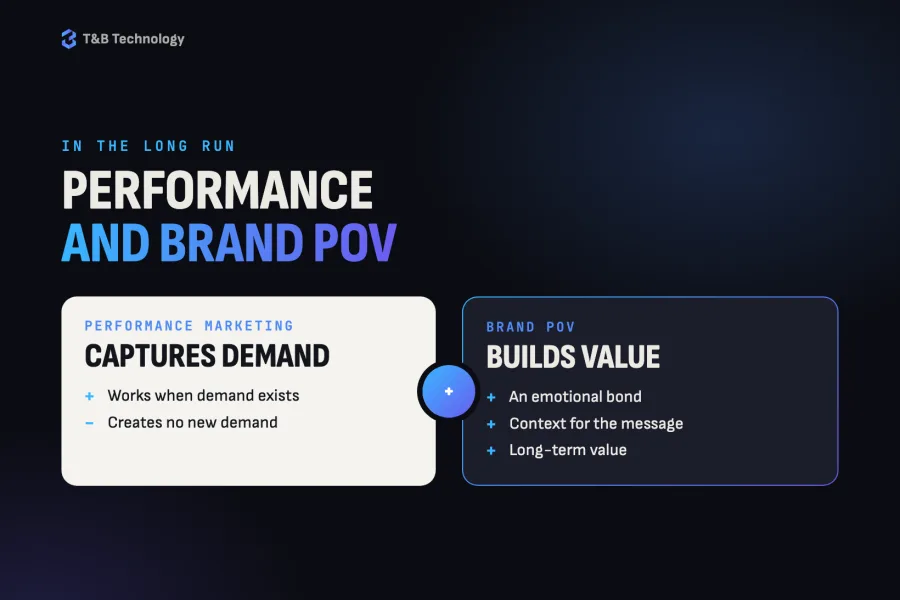
How a brand POV strategy builds long-term value
A well-defined brand POV strategy creates an emotional connection with your audience. It gives your communication context and turns content into a carrier of ideas rather than just a sales tool. The result is higher engagement, better recognition and stronger loyalty.
Brands that take a clear position stand out more easily in crowded markets. They compete not only on price or features but on values and vision. That matters all the more at a time when people are looking for meaning and authenticity.
A brand POV strategy also supports every other marketing effort. It makes ads more effective, content more memorable and communication more consistent. Brand and performance end up pulling in the same direction.
Combining brand POV with performance marketing
To be clear, a brand POV strategy does not replace performance marketing; it builds on it. The most successful brands combine the two, using performance for short-term results and brand POV for long-term value.
When ad campaigns rest on a clear point of view, they do more than sell: they build the brand. Every investment in advertising then works not only for an immediate result but for future growth as well.
Bringing the two together takes consistency, clearly defined messages and long-term thinking. It is a process that involves both the marketing team and the strategic management of the brand.
The future of digital growth
With so much information competing for attention, brands without a clear position risk becoming invisible. A brand POV strategy gives companies a framework for building a recognisable, lasting presence.
It is not a short-term tactic but a long-term asset. It demands consistency, clarity and commitment, and in return it offers sustainable growth and a competitive advantage.
Ultimately, the future of marketing belongs not to those who simply optimise campaigns, but to those who build meaningful, recognisable brands.
If your question is about the whole brand rather than one detail, it is bigger than an article. Here is how we handle that: branding, from identity to brand book.