
via public DNS
SPF, DKIM and DMARC check
SPF, DKIM and DMARC check
SPF, DKIM and DMARC for your domain: what is missing, what is wrong and the exact record that fixes it.
05 — ARMOUR · CARE & SECURITY
Website security testing: with your permission, we load-test your site, run simulated attacks and review the hosting, then report the findings by severity.
At a glance
WHAT IS INCLUDED
How many visitors at once the site can handle, where it slows and where it stops — measured, not guessed.
SQL injection and XSS attempts, guessing weak passwords, hunting for exposed admin panels and forgotten test URLs.
Who can get in where: lockout after failed attempts, two-factor sign-in, what each user is allowed to do.
Forms, sign-up, customer accounts and the path to payment: spam, abuse and leaked customer data.
PHP, platform and plugin versions, file permissions, open ports, HTTPS and certificate expiry.
Findings by severity, reproduction steps and the order of fixes. The report is yours; the re-test is optional.
HOW IT RUNS
Which addresses, panels and systems are tested, when and in what window. Written down before we start.
Load, attacks and a hosting review — inside the agreed window, outside your peak hours.
Findings by severity, each with the steps that reproduce it, and what to fix first.
A separate quote — from us or from your own team. Then a re-test, if you want one.
A website security test is an agreed attempt to break into your site while it is live. We put it under load, look for weak passwords and exposed admin panels, try attacks through the forms and review the hosting. The report ranks every finding by severity, shows the evidence and says what to fix first. It is yours; the fixes are quoted separately.
Before we start, we agree the scope and a test window in writing; the times are Bulgarian local time. You supply the addresses and panels to test, your busiest hours (we test outside them) and test accounts if logins are in scope. Anything outside the agreed scope stays untouched. The evidence is the steps that reproduce each finding, so your own developer can check it without us.
A test is worth it when the site holds more than your own data: a store with payments and customer accounts, a dealer or staff login, an admin panel several people share.
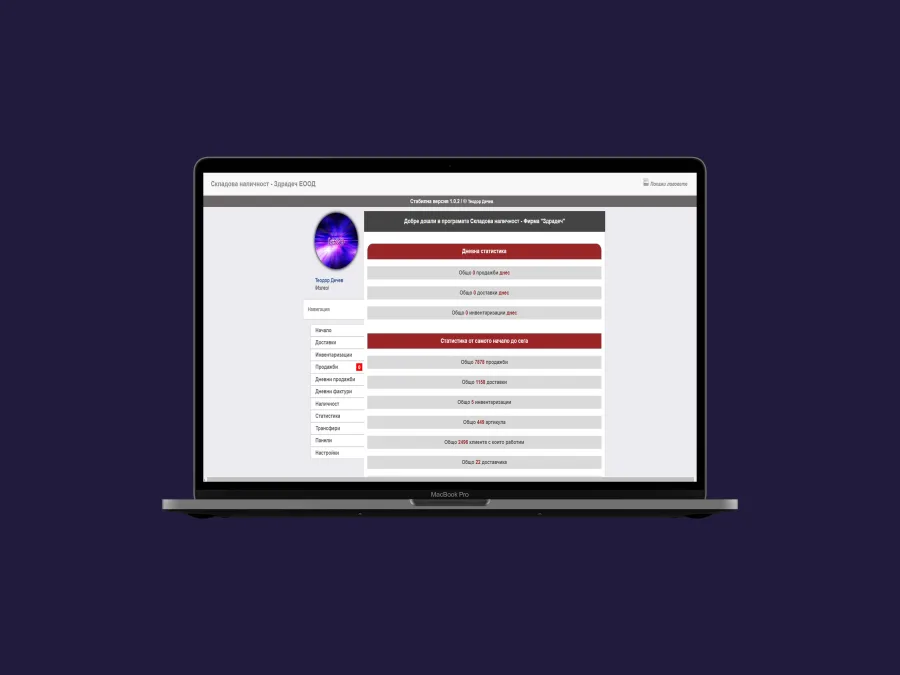
A test shows the site as it is that day; every update changes it. So afterwards website maintenance takes over: a weekly check, updates and backups. On the T&B platform we ship the updates ourselves, tested first. Some systems are safest kept off the internet: the warehouse software we built for Zdradech runs only on the company's network.
Free, instant and with no sign-up. The result is yours.
SPF, DKIM and DMARC for your domain: what is missing, what is wrong and the exact record that fixes it.
When the certificate expires, who issued it and whether the chain is complete, with a reminder for your calendar.
PROJECTS
 Gabriela Yordanova
“There are agencies that build you a website. And there are those that catch your idea from two sentences and turn it into something that actually works. We are with them for websites, ads and everything digital — and what we love most is that they do not wait for you to tell them every next step. They suggest, think, test and act. And when you open the site and say to yourself “Hey, that is exactly what I meant”, you know you have found your people. 🚀”
Translated from Bulgarian
 Ivan Vishanov
“T&B Technology built an online store for me and I am very happy with the result. Communication was easy, they took my ideas on board and kept the deadlines they promised. I would work with them again.”
Translated from Bulgarian
 Demetra Shoes
“A great team of motivated, responsive young people. Always there when a question or a problem comes up. They work faultlessly and with understanding. Full of ideas, original and extremely driven.”
Translated from Bulgarian
 Kameliya Angelova
“Young and ambitious team. Great communication, quick response, and always willing to help. Highly recommended!”
 Antonina Radova
“Everything was handled smoothly and completed on time. I highly recommend this company to anyone looking for reliable service, quality, and professionalism!”
 Petya Petrova
“Kudos for the professionalism and quality you offer! Keep up the great work and continue to be an inspiration!🫶”
 Stiliyan Ivanov
“A very professional and creative team. They were responsive, attentive to our needs, and delivered everything exactly as promised. Great communication throughout the project and excellent attention to detail. Highly recommended!”
 Stanislav Penev
“The best agency I have ever seen. They are loyal and responsible, they explain everything you need to know, and—most importantly—you see results!”
 Denislav Penev
„Май-добрата агенция в сферата.
Вършат си работата бързо и качествено с неоспорими резултати!“
PRICE
The price of a security test depends on its scope: how many addresses and panels are in it, and whether a store with payments or a customer login is included. We name it once the scope is agreed. Comparing quotes? Weigh the scope, not the total, and ask whether every finding comes with steps to reproduce it and whether the fixes are in the price or a separate quote. What moves the price is on the pricing page.
QUESTIONS
A website security test is an agreed attempt to break into your site while it is live, so you see its weak points before an attacker does. We put the site under load, try attacks through its forms and URLs, guess passwords, look for exposed admin panels and review the hosting. Unlike an automated scan, which lists possible problems, every finding in the report has been reproduced and ranked by severity.
The report lists every finding with its severity, the steps that reproduce it and what to fix first. It is yours to hand to another team without going through us. High severity means a stranger can do real harm today; medium means the harm depends on a condition that is likely; low means a safeguard is missing but the harm also depends on something unlikely. Ask the same of the whole site: who owns the code and the access.
The site may slow down or stop responding, which is why the load test runs only inside a window you approve in advance, outside your peak hours. The test is meant to find the point where the site gives up: if it does, that is the finding, not an accident, and the report says at what load it happened. Once we reach that point we stop the load; there is nothing to gain from keeping the site down.
The best time for a security test is before something important depends on the site: a launch, a busy season, a new customer login or payment method, a move to another host. It is also worth doing on a site nobody has updated since launch. A test covers the site as it was that day; repeat it after any big change. How long it takes depends on the scope; we agree it in writing, with the window, before we start.
Yes, we fix what we find if you want us to, as a separate quote, so you see that cost apart from the test. Your own team can work from the report instead. After the fixes, on request, we go back through the findings and confirm that each one is closed.
Yes. An online store that takes payments is where a security test matters most, because it holds orders, addresses and customer accounts. We test sign-up and login, the basket, coupons, forms, the admin and the return from the payment page. With card payments the number is usually entered on the payment provider's page, not in the store, so we test the path around it. Starting a store from scratch? See online store development.
Shut the attacker out and keep the evidence: from a device you trust, change the hosting, FTP, database, admin and email passwords, and delete nothing before copying it. Tell your host: it has logs and often older backups. If the site redirects visitors or shows someone else's content, take it offline. Restore from a backup made before the break-in, not necessarily the latest. Then a security test shows how they got in, and website maintenance keeps updates and backups going.
Cannot find your question? Write to us — a person answers, not a bot.
LAST CHANGED · · T&B Technology
One layer or all seven — we start from whatever is in your way today.