Personalised marketing: turning advertising into a conversation
Personalised marketing turns advertising into a conversation. Why speaking directly to each customer is where effective communication is heading.
Selli Porteva ·
People see hundreds of ads and messages every day, so catching their attention has become one of the biggest challenges brands face. Standard messages no longer work: people want an individual approach, authenticity and meaning. That is where the power of personalised marketing comes in.
This approach doesn’t simply try to reach the widest possible audience; it tries to build a connection. At its centre is the person, with their needs, preferences and behaviour. The aim is to speak not to the market as a whole but to the individual customer, so that the message feels personally addressed to them.
What is personalised marketing?
Personalised marketing is a strategy that uses data and analysis to create content matched to the specific interests and needs of your audience. It can take the form of recommendations, personalised email campaigns, targeted ads or tailored visual content.
But personalisation is more than putting a customer’s name in an email or showing them a product they have already looked at. Real personalised marketing means understanding the context: what inspires them, what they need right now and what could help them make a better decision.
It is a long-term process of building trust, in which communication runs both ways. The customer isn’t just a recipient of messages but an active part of the conversation with the brand.
Why personalised marketing matters
Personalised messages have a deep psychological effect. When people feel that a brand understands them and speaks their language, a sense of belonging and trust follows. That turns a one-off customer into a long-term partner.
Research shows that over 70% of consumers prefer to buy from companies that know them and offer a personalised experience. In an age of automation and endless choice, it is the human element that makes the difference.
Personalised marketing works because it speaks directly. It cuts through the noise and puts the focus on what really matters to the customer. Instead of trying to win attention through volume, it holds attention through relevance.
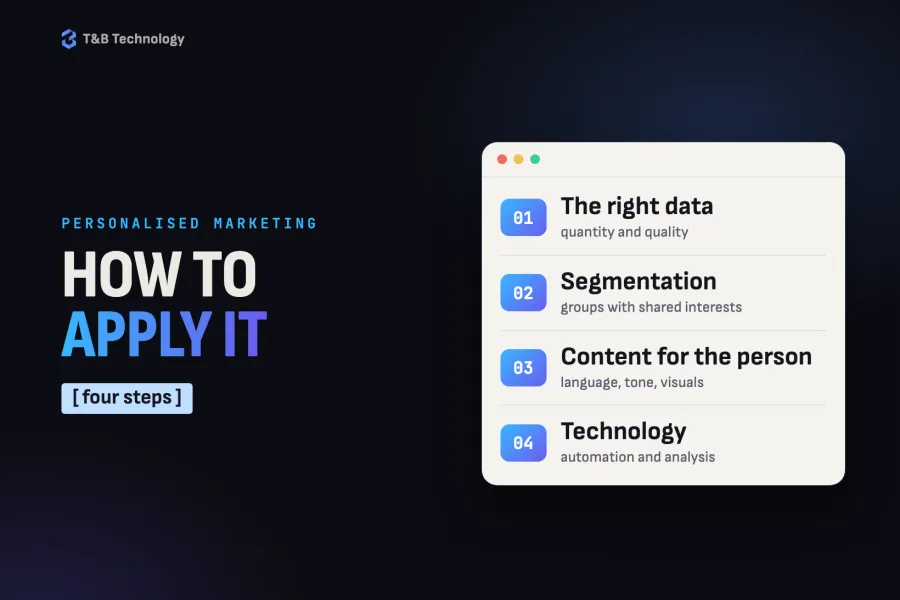
How to apply personalised marketing in practice
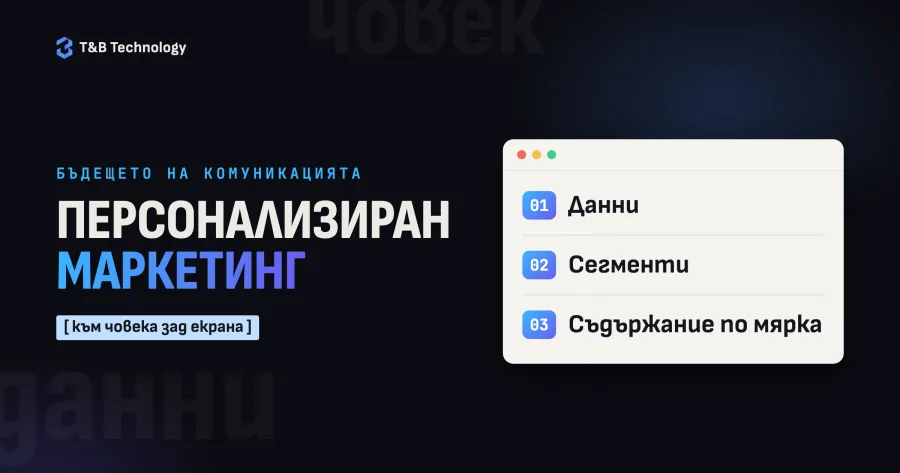
The first step is to collect the right data, and to look at quality as well as quantity. Analysing your customers’ behaviour, habits and emotional motives gives you a deeper understanding of who they are.
Next comes segmentation. Not all customers are the same, so it is important to create groups that share characteristics and interests. Each group should receive messages that fit its context.
Content should be created with the person behind the screen in mind. Language, tone and visual identity should be adapted so that they give a sense of personal attention.
Technology can support the process through automation, analytics and artificial intelligence, but the success of personalised marketing depends on authenticity. Data can show you the “what”; only human understanding can explain the “why”.
Personalised marketing as the future of communication
Personalised marketing isn’t just a fashionable concept. It is the natural evolution of the way businesses and customers communicate. It replaces the mass approach with a targeted model built on dialogue, in which both sides take part.
Companies that invest in this kind of communication don’t just increase their sales; they build stronger, more lasting relationships with their audience. Personalisation creates a sense of trust that advertising can’t buy. It is earned through attention and understanding.
Marketing that speaks directly
Marketing that speaks directly is marketing that leaves a mark. A personalised approach turns advertising from noise into conversation, and a message into an experience. In a world of short attention spans, authentic communication becomes every brand’s most valuable asset.
If the question now is who should do it for you, see our digital marketing service, with a plan and a report every month.