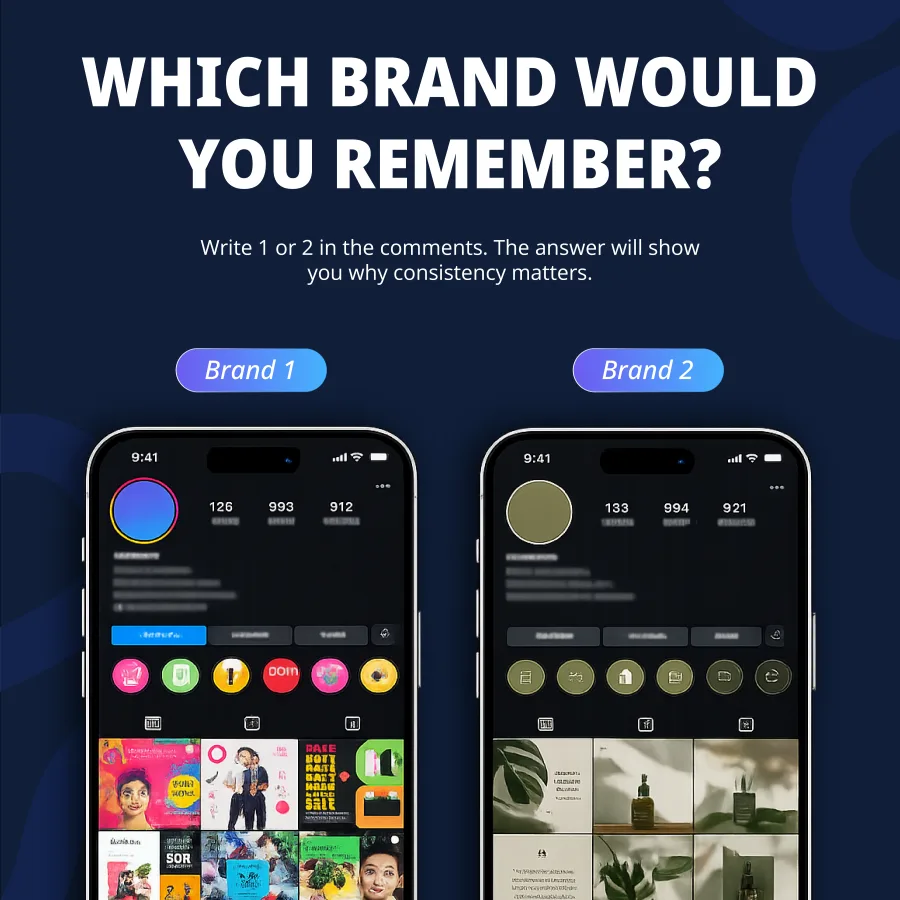
Omnichannel strategy: what omnichannel marketing is and how to build it
Omnichannel marketing joins every channel into one experience for your customers. What it is, why it pays off and the five things a strategy needs.
Selli Porteva ·
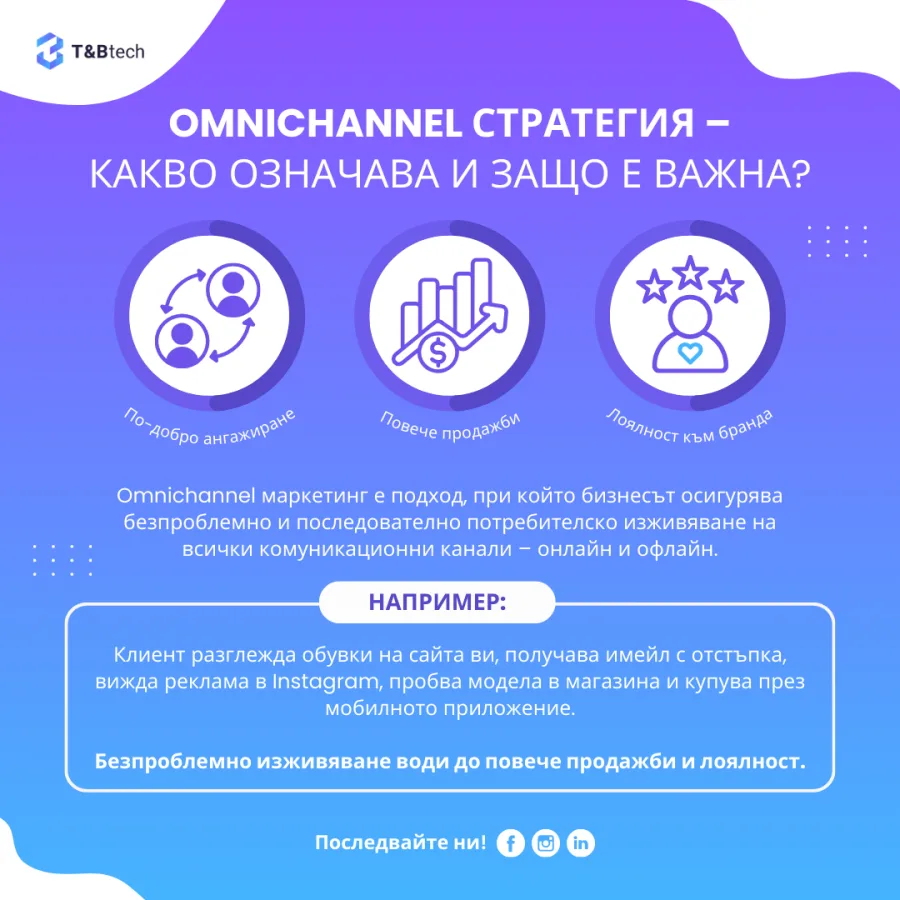
An omnichannel strategy is an approach in which a brand integrates all of its communication channels to give its customers an easy, personalised experience.
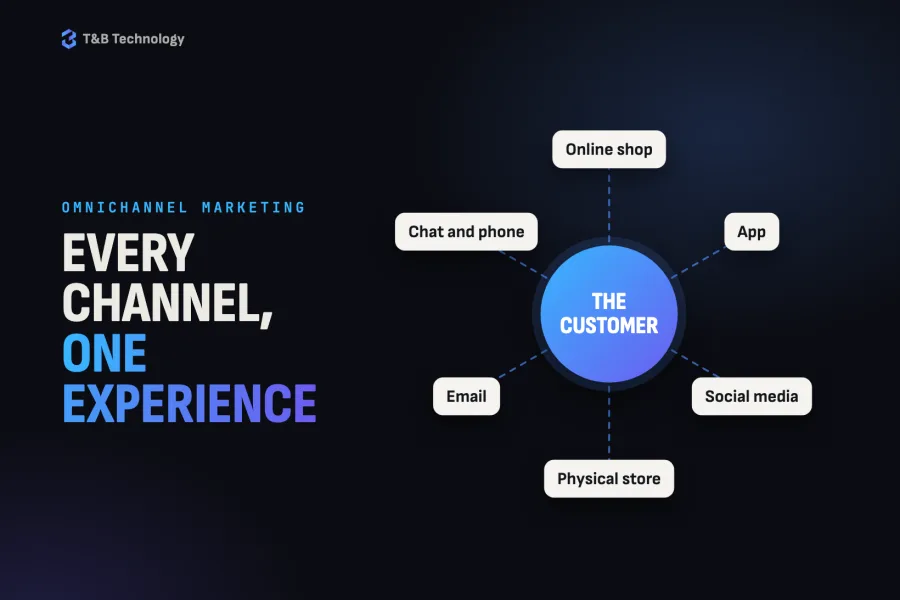
What is omnichannel marketing?
Omnichannel (from the Latin omni, “all”, + channel) is a strategy for engaging with customers through every possible channel (online, offline, mobile apps, social media, phone, chat and more) while making the move between them smooth, integrated and personalised.
Unlike a multichannel approach, where the channels exist independently of each other, an omnichannel strategy connects the channels into one whole, so that the customer feels they are dealing with a single, well-coordinated system.
Picture this
- A customer browses shoes in a brand’s online store on their phone.
- They add a pair to the basket but do not complete the order.
- Later, a push notification arrives in the brand’s mobile app, offering 10% off the same shoes.
- They decide to go to a physical shop. There, by scanning a QR code, they find the pair is in stock, try it on and buy it on the spot.
- They receive an email recommending accessories that go with their new purchase.
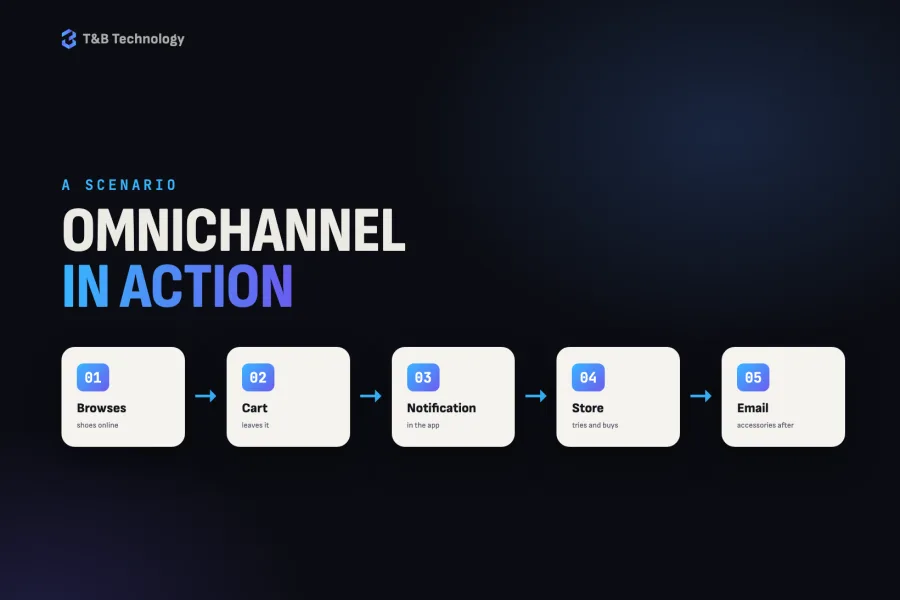
That is omnichannel in action: no interruptions, no need for the customer to start again, and a sense that the retailer understands them and respects their time.
Why omnichannel marketing is worth it
1. It builds customer loyalty
Customers are more likely to come back to a brand that gives them a convenient, consistent and personalised experience, whether they shop online, by phone or in a physical shop.
2. It increases sales
Studies show that omnichannel customers spend up to 30% more than those who use only one channel.
3. It improves data collection
When every channel is connected, the brand gets a full picture of customer behaviour, which makes for more accurate forecasting, personalisation and effective marketing.
4. It strengthens your competitive edge
Many businesses still do not run an effective omnichannel strategy. Those that get there early will stand out in the market.
How to build a successful omnichannel strategy
1. A central customer data platform (CDP)
Bringing all the data from different channels into one system makes personalised, consistent service possible.
2. Communication
Marketing, sales, customer service and IT have to work in sync: an omnichannel strategy is a team effort.
3. Integration
CRM systems, chatbots, POS terminals, marketing automation and mobile apps that “talk” to each other are the foundation of the strategy.
4. A seamless user experience
UX/UI design should be intuitive, convenient and consistent across every channel. The visual identity should be the same everywhere, too.
5. Personalisation
Use the data you have to deliver relevant content, offers and recommendations: each customer should feel like “the only customer”.
A necessity, not a luxury
An omnichannel strategy is not a luxury. It is a necessity for any modern business that wants to stay competitive and meet the expectations of today’s customers. A seamless customer experience does more than raise satisfaction: it brings real financial benefits, too. It is time to think not in channels, but in connected experiences.